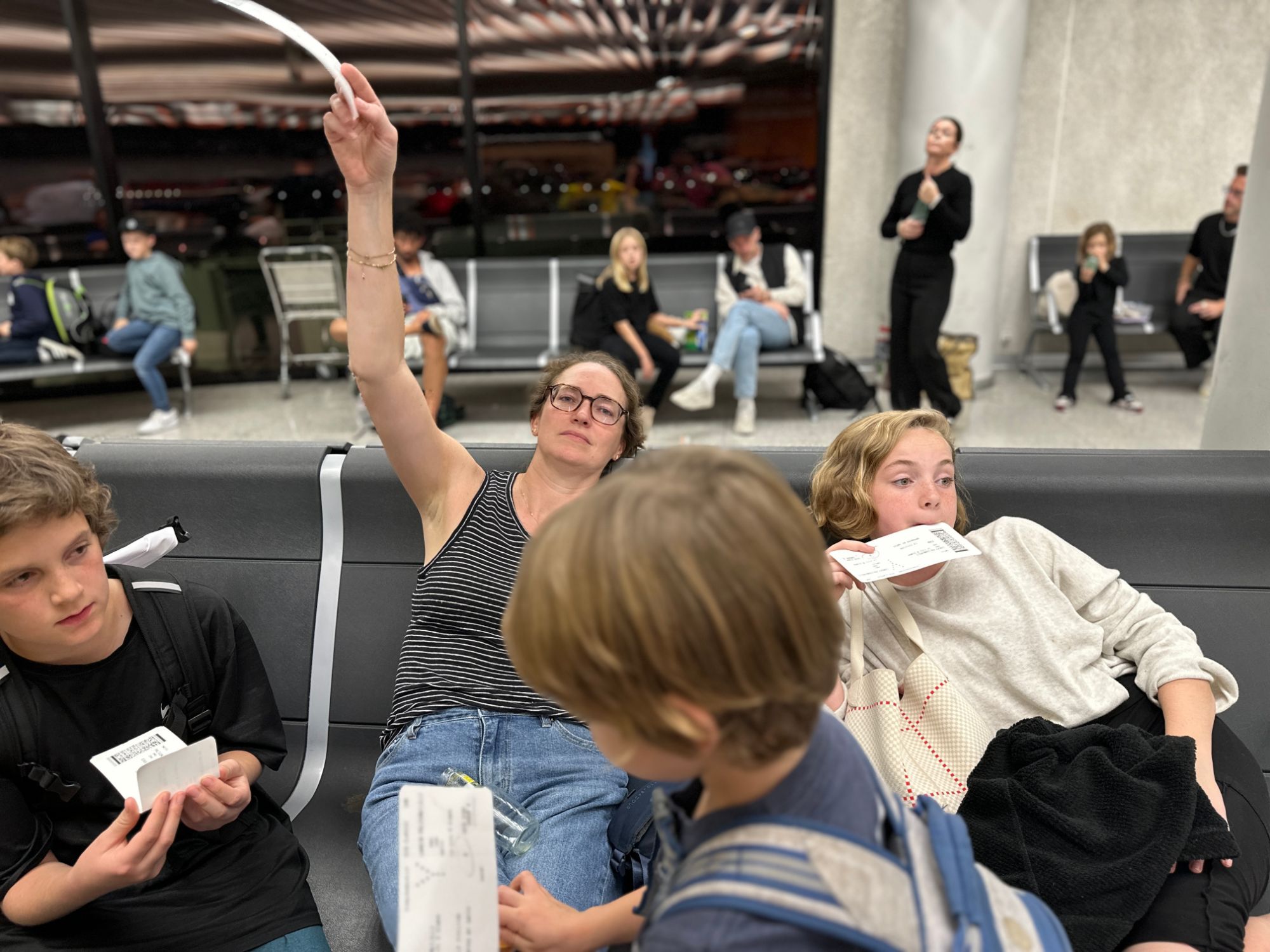
Last spring, I got a call from an unknown number. It was a tennis coach letting me know my son was supposed to be on the court playing a tournament right then... across town. My heart sank and my anxiety shot up. My son loves tennis, and I had failed him. It may seem small, but many of you know the pain of these moments and the way they can seep deep into you, making you feel like a bad parent.
Last weekend, I joined Stockholm’s walk for mental health on 10 October, and I spoke about how rarely parental stress is part of that conversation and should be.
The numbers behind the feeling
Parental stress has real health consequences. In 2024, the U.S. Surgeon General reported that 48% of parents say their stress is completely overwhelming most days, compared to 26% of other adults. The Surgeon General called parental stress an urgent public health issue.
Here we are two years later. I hear terms like “mental load” more often in conversations about household labor, but most parents still don’t have tools to ease the stress they find so overwhelming.
Why it matters for our mental health
When stress becomes the background noise of every day, it doesn’t stay in our calendars. It shows up as poor sleep, short tempers, anxiety, and burnout. It strains our relationships, and our kids feel it too. This isn’t a time management problem. It’s a mental health issue, and it deserves to be treated like one.
Where parental stress comes from
We think about parental stress as coming from three key factors.
- There’s simply too much to do. Parents today are doing more than ever. More households have two incomes than ever before, and parents spend more time with their children than ever before. And if you’re a parent, you probably still don’t feel like you’re doing enough. That’s because our standards for ourselves and each other are unreasonable. Social media sets the bar impossibly high, as if we should be growing our own food while running a company from the C-suite. On some level we know we’re chasing the unattainable, but we often don’t know how to break the cycle of doing too much and feeling like we’re failing.
- The work of running a family often isn’t shared fairly. 88% of couples say they want to share the work equally, but more often than not, they don’t. Women carry more of the responsibility for keeping the home and family running. That balance is skewed even further when we look at the invisible, or mental, work: the planning, anticipating, deciding, and remembering. The shoe sizes. The dentist appointments. The school holiday plans. Research shows 71% of this mental labor lands on women. And even couples who want to share it often don’t know how. There’s no simple way to see and discuss this work, so it’s hard to share. That’s no one’s fault. It’s a system problem.
- The work can feel like, well... work. It’s not always our favorite thing to do. It’s often too loud, too cold, or too long sitting on the floor. It’s too much time in the car or on our feet. It takes time away from the things we enjoy, whether that’s working (guilty here), reading, watching TV, or a favorite sport (hello, tennis!). Caring for a home, and especially a family, can feel like a slog. That shapes our outlook on the day, and our stress level.
Others may name more factors, but these three are at the core of how we at Fynn think about parental stress. They shape everything we build: less for each parent to carry, a fair and simple way to share what’s left, and more room for the moments that matter.
Two things you can try this week
- Write the invisible list down. Sit with your partner and list everything you’re each tracking in your head. Seeing it on paper turns a vague feeling into something you can actually share.
- Own a task, don’t just help. Taking something off your partner’s plate means owning all of it: the remembering, the planning, and the doing, from start to finish.
Stressed parents deserve real support. Not to just try harder.
If you’re feeling overwhelmed, please reach out to someone you trust or a mental health professional. You don’t have to carry it alone.